Picking the right boat storage comes down to what you can afford and how much protection your boat needs. Whether you go with outdoor open-lot parking or climate-controlled indoor space, each option brings different price points and trade-offs worth understanding. Getting this decision right can save you thousands in repairs down the road.
- Outdoor storage starts around $50-$120 monthly while indoor facilities run $100-$250 or more, with covered options sitting in the middle range.
- Shrink wrapping costs $8-$25 per foot but creates moisture concerns if done incorrectly, while custom covers cost more upfront but last years longer.
- Security features like gated access, surveillance cameras, and proper lighting matter just as much as the storage type you choose.
What Outdoor Storage Really Offers
Open-air storage is the cheapest way to keep your boat off-season, typically running $50 to $120 per month depending on your location. You’ll find this option at marinas, storage yards, and dedicated facilities across the country. The catch is pretty straightforward: your boat sits exposed to sun, rain, snow, and whatever else nature throws at it.
If you go this route, plan on shrink wrapping or getting a quality cover. Leaving a boat completely exposed invites UV damage, water intrusion, and accelerated wear on your upholstery and electronics. Drive through any marina in Pittsburgh, PA during winter and you’ll see rows of wrapped boats waiting out the cold months.
Prices vary a lot based on geography. Coastal areas and popular boating regions charge more due to demand, while inland locations often offer better deals. A 25-foot boat might cost $1,000 for the winter season in some markets but push $2,000 in higher-demand spots.
Covered Storage: The Middle Ground
Covered storage gives you protection from direct weather at $75 to $190 monthly. Think of it like parking under a carport instead of a garage. You get shade from the sun and shelter from rain and snow, but you’re still dealing with temperature swings and humidity.
This option works well for boats that don’t have a ton of sensitive electronics or when your budget can’t stretch to indoor rates. The roof overhead prevents snow buildup and reduces UV exposure, which helps preserve your gel coat and canvas.
Many facilities offer covered racks or canopies where multiple boats share space under one large structure. Access is usually easier than indoor storage since you don’t need staff to move boats around with forklifts.
Indoor Storage: Maximum Protection
Indoor facilities provide the best protection, running $100 to $250 monthly for most boats. Some upscale operations charge $50 to $200 per foot per season. That higher price tag gets you climate control, security, and confidence your boat stays dry and stable through harsh weather.
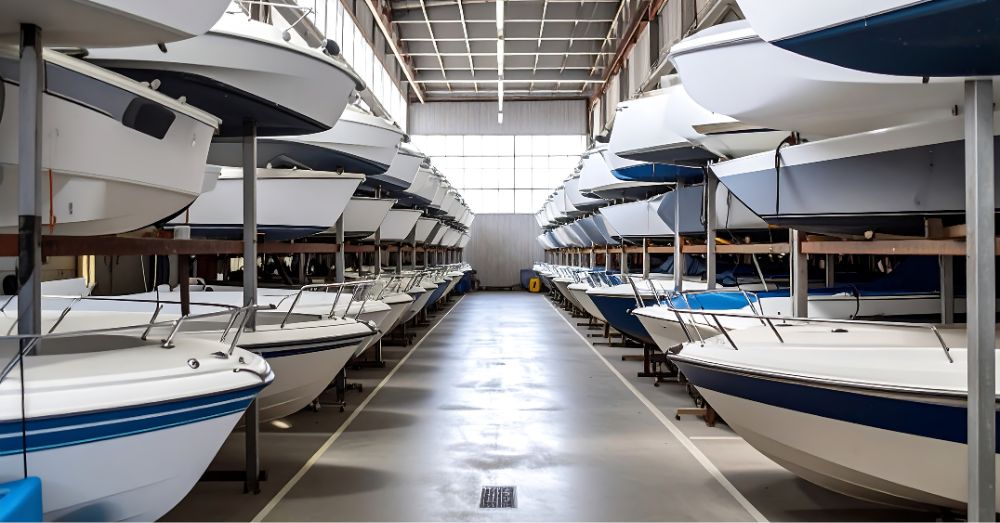
Dry stack facilities stack boats vertically using forklifts, squeezing more boats into less floor space. When you want to use your boat, you call ahead and they’ll have it ready at the launch. The downside is you can’t just show up on a whim to grab something you forgot or work on maintenance projects.
Traditional indoor storage in a warehouse setting gives you more access to your boat. You can visit during business hours to check on things or do basic upkeep. This matters if you’re the type who likes tinkering or installing new equipment during the off-season.
Shrink Wrap: The Ongoing Debate
Professional shrink wrapping costs $8 to $25 per foot and provides excellent weather protection. The material creates a waterproof seal that keeps rain and snow out while standing up to wind better than tarps or fabric covers.
But shrink wrap doesn’t breathe, which causes issues. Any moisture trapped inside when the boat gets wrapped stays there all winter. Without proper venting, you’re creating a perfect environment for mold and mildew. Most pros install vents during the wrapping process, but it’s still something to watch.
Another downside: shrink wrap is single-use. You pay for new wrap every season, which adds up over the years. Some boat owners carefully remove their wrap in spring and reuse it for another season or two, but that takes patience and storage space.
Custom canvas covers cost more initially but last 10 years or longer with proper care. They’re breathable, reusable, and give you easy access through zippers. The upfront investment is higher, but the math works out better long-term if you keep your boat for many seasons.
Security Can’t Be an Afterthought
Storage facilities with gated access, surveillance cameras, and proper lighting deter theft better than open lots. Ask about their security setup before signing a contract. Video systems that rewrite footage after 72 hours won’t help much if your boat disappears during a three-month storage period.
Lock everything on your boat. Use quality marine-grade locks on hatches, cabin doors, and storage compartments. Remove electronics, fishing gear, and other valuables entirely. Thieves look for easy targets, and an empty boat is less appealing than one loaded with expensive gear.
Trailer security matters too if you’re storing on a trailer. Use a hitch lock, remove one wheel, or chain the trailer to something immovable. GPS tracking devices offer another layer of protection and can help recover a stolen boat quickly.
Making Your Choice Work
Start by figuring out your actual needs. A fiberglass bass boat without a cabin can handle outdoor storage fine with proper covering. A yacht with leather upholstery and high-end electronics deserves climate-controlled indoor space. Match your storage choice to your boat’s value and sensitivity to weather.
Location plays into this too. Boats in Arizona face different challenges than boats in Minnesota. Heavy snow loads require sturdier covers and stronger frame supports. Intense sun demands better UV protection. Think about your local climate when weighing options.
Visit facilities in person before committing. Check how boats are actually stored, look at their security setup, and talk to other boat owners using the space. Online reviews help, but seeing the operation yourself tells you more about whether your boat will get proper care.
This post may contain affiliate links. Meaning a commission is given should you decide to make a purchase through these links, at no cost to you. All products shown are researched and tested to give an accurate review for you.